
BUREAU OF INDIAN STANDARDS (BIS)
Bureau of Indian Standards (BIS) serves as India’s national standards body, operating under the Department of Consumer Affairs, Ministry of Consumer Affairs, Food & Public Distribution, Government of India. Established by the Bureau of Indian Standards Act, 2016, which came into effect on 12 October 2017, BIS ensures product safety, quality, and reliability in India.
BIS Certification aims to enhance consumer confidence by guaranteeing product quality, ensuring public health protection, and safeguarding customers from hazardous products.
Importance of BIS Certification
- Establishes and maintains national standards.
- Ensures Indian standards are harmonized and regularly updated.
- Improves productivity through accurate standardization.
- Provides specialised training for quality control and certification.
- Oversees periodic updates and changes in schemes.
- Gives significance to regional and branch offices for better implementation.
List of Products Covered Under BIS Certification
Scheme-I: ISI Mark Certification (Mandatory Certification Products)
BIS Certification under Scheme-I (ISI Mark) covers a wide range of products that must mandatorily comply with Indian Standards before being sold in the Indian market. These include products related to electronics, construction materials, household items, and industrial goods. Certification ensures safety, quality, and consumer protection.
🔗 Click Here to Know MoreScheme-II: Compulsory Registration Scheme (CRS) - Electronic & IT Goods
Under Scheme-II (CRS), manufacturers of specific electronic and IT goods must obtain BIS Registration before launching their products in India. This scheme ensures that products meet Indian safety standards and are tested in BIS-recognised labs.
🔗 Click Here to Know MoreScheme-IV: Certification of Conformity
Scheme-IV offers voluntary BIS certification for products not covered under mandatory schemes. It involves product testing, evaluation, and BIS-conducted factory audits. Helps both Indian and foreign manufacturers prove product quality and safety.
🔗 Click Here to Know MoreTypes of BIS Certification

ISI Mark Certification
Standard mark for products meeting Indian safety & quality standards.
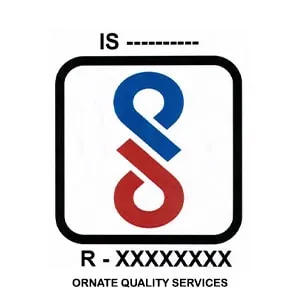
Compulsory Registration Scheme (CRS)
Mandatory for electronics & IT goods under notified categories.
Foreign Manufacturers Certification Scheme (FMCS)
Allows foreign companies to use BIS mark on products exported to India.
Product Certification
The BIS certification process involves testing and evaluation of the product.
BIS Laboratory Recognition Scheme
Recognizes testing labs that comply with BIS quality requirements.

ECO Mark Certification
Eco-friendly certification for products meeting environmental standards.
Recognition of centers
Approves centers for quality check of precious metals.
BIS CRS Certification
For manufacturers of electronics under the CRS framework.
Management System Certification
Certification for organizations meeting quality management standards.
Documents Required for BIS Certification
To obtain BIS Certification, manufacturers must submit specific documents:
- Applicant and factory's Name & Address Proof
- List of Testing Equipment and Facilities
- Manufacturing Process Flow Diagram
- Details of Outsourcing (if applicable)
- Factory Location Plan
- Detailed List of Machinery
- Certificate of Incorporation or Registration Certificate (Company)
- Calibration Certificates (Testing Equipment)
- Third-party Laboratory Test Reports
- Authorization Letter (if signed by an authorised signatory)
- Consent Letter from CEO
- Undertaking & Affidavit (if applicable, with Indian Representative's details)
- Original Test Reports (BIS Laboratory)
- Indian Agent and Nomination Form (for foreign manufacturers)
- Acknowledgement Receipt
- Undertaking related to Test Reports
BIS Certification Process in India
The BIS Certification process in India ensures that products meet national quality and safety standards before entering the market. It involves product testing, document verification, factory inspection, and license issuance by BIS. This certification helps manufacturers build trust and legally sell their products in the Indian market.
- Step 1 - Submit Application Form with Required Documents
- Step 2 - Submit Product Sample to BIS-Approved Lab
- Step 3 - Factory Audit & Product Evaluation
- Step 4 - Review & Grant of BIS License
- Step 5 - Evaluation of Performance Report
- Step 6 - Test Results Verification
- Step 7 - Grant of BIS Certification
Validity: 2 years
Renewal Period: 1 year (maximum 5 years)






















FREQUENTLY ASKED QUESTIONS (FAQ)
1. Is BIS Certification mandatory for all products?
No, only products listed under BIS's mandatory schemes (like ISI or CRS) require certification. Other products may apply under voluntary certification schemes.
2. Do Indian importers need BIS Certification for foreign products?
Yes, imported products listed under BIS schemes must be certified before entering the Indian market. Importers often act as Indian Representatives for foreign manufacturers.
3. How do I check if my product requires BIS Certification?
You can check the updated list of mandatory BIS products on the official BIS website.
4. What happens if a non-certified product is sold in India?
Selling uncertified products listed under BIS mandates is illegal and can lead to penalties, fines, or product seizures.
5. Can I use the BIS logo without certification?
No, using the BIS standard mark (ISI logo) without a valid license is a punishable offence under the BIS Act.