CE CERTIFICATION
CE Certification stands for Conformité Européenne, which means European Conformity. The CE mark aims to ensure that only safe, faultless, and high-quality goods are offered in the European market. CE marking is required for many products sold in the EEA. CE marking verifies that your product has been tested and fulfills EU safety, health, and environmental protection standards. It applies to products manufactured both inside and outside the EEA and then sold within the EEA.
To receive the CE certification on your product, you'll need to put up a technical dossier demonstrating that it meets all of the EU's regulations. As the manufacturer of the goods, you are solely responsible for declaring compliance with all standards. Once your product has received the CE mark, you may be required to give all CE-related documents to your distributors and/or importers.
WHAT IS CE MARKING?
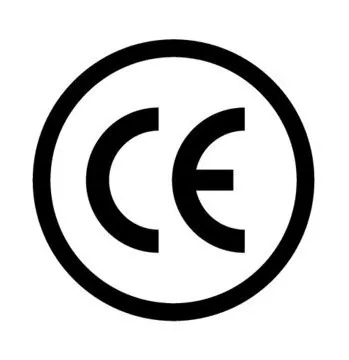
CE Certification or Marking is only required for products that meet EU criteria and are marked with the CE symbol. The initials CE on commercial products indicate that the maker or importer certifies that the product complies with European wellbeing, protection, and ecological protection regulations. It is not a certification and it does not indicate the quality of the product. Its main purpose is just to sell the products in European Economic Area (EEA) freely.
Documents Required for CE Certification
- Product Details/Description
- Product Test Report
- Manufacturer Declaration
- Proof of Product Conformity
- Copy of Risk Assessment
How to Obtain CE Marking?
- Identify EU Requirement: The first step to get CE Mark is to decide which product and model are certified with a CE mark. Also identify the European requirements—does the product meet EU requirements or not.
- Product Meets Specific Requirements: After identifying the EU Requirements, the next step is to check whether products meet specific requirements or not, which are mandatory for the CE Mark, and also identify the directives applicable and harmonic standards applicable for the product. Some of the directives are medical device, machinery device, toy, low voltage (LVD), etc.
- Product Test: Once the product fulfills all the requirements, it needs to be tested (in-house or outside) according to the directive and standard requirements.
- Compile the Technical Dossier: Prepare the technical construction file of the product to be CE marked, and forward it to the certification agency involved in CE Registration/Certification.
At last, affix the CE marking and draft a declaration of conformity.
Note: Self-certification allows some products to be CE marked. This isn't the case with every product. Some products require the involvement of a CE mark notification agency or competent entity to be marked. When self-declaration is not an option, CE marking certification or registration organizations must be consulted from the beginning of the product design process.
MINIMAL RISK
Options for products with minimal risk include self-certification, where the manufacturer prepares a Declaration of Conformity and affixes the CE Marking to their own product.
Many directives require products or systems with greater risks to be independently certified; this must be done by a Notified Body. This is an organization that has been nominated by a Member Government and officially notified by the European Commission.
Notified bodies serve as independent test laboratories and perform the steps outlined by the directives. They must have the necessary qualifications to meet the testing requirements specified in the directives.
Notified bodies may be either private sector organizations or government agencies. Manufacturers are free to choose a notified body located in any member state of the European Union.
FREQUENTLY ASKED QUESTIONS (FAQ)
1. What is the CE Marking and why is it important?
CE Marking indicates that a product complies with European Union safety, health, and environmental requirements. It allows the product to be freely sold within the European Economic Area (EEA).
2. Who needs to obtain CE Certification?
Any manufacturer or importer selling products in the EEA must ensure their goods meet EU directives and obtain CE Marking before market entry.
3. How long does it take to get CE Certification?
The timeline varies depending on the product type, applicable directives, and testing requirements. It can take anywhere between a few weeks to several months.
4. What documents are required for CE Certification?
Key documents include product details, test reports, declaration of conformity, risk assessment, and proof of product compliance as per EU standards.
5. Can I self-certify my product for CE Marking?
Yes, for low-risk products. However, high-risk items require involvement of a notified body authorized by the European Commission to perform compliance verification.